Welcome to the blog of the Rehoboth Beach Cheese Company. Pull up a bar stool and experience our Counter Culture!

I'm Andy Meddick, Owner and President of the Rehoboth Beach Cheese Company. In 2005, I left my corporate I.T. job in Washington DC, to relocate with my spouse's business to the DE beaches. What to do now we live in a state where chicken houses can often outnumber human? Faced with a four hour round trip to the closest decent food market, I opened my first store, Good For You Market, a full service grocery store, focusing on organic, natural, and gourmet foods. In the worst economy since the 1930s, I won Best of Delaware awards three years running. After four years, I decided to simplify the business, re-aligning to focus on what we did best. The result is the Rehoboth Beach Cheese Company. We sell (retail and wholesale) artisan/farmstead cheeses, charcuterie, organic produce,and other specialty foods such as spices and seasonings. We also teach cheese classes, cater, sell online, and consult with other businesses to build their cheese programs.

I've learned much since starting out. For example, staffing was a steep learning curve, and I discovered that a savvy sales and marketing professional lay dormant in an I.T. geek! Systems analysis, business analysis, database design and development, data architecture, web design, specialty cheeses and foods, organic farming, catering, and cooking. What do all these threads have in common? Curiosity! It begets technique, which in turn begets better solutions to commond needs. Why complain about lack of choice, if you're not willing to offer an alternative? Our move, and my business development has taught me to participate in life, and to be ever curious! Enjoy!

Oct 18, 2011

Poppadom Preach...

So, I was ruminating (no it will not ruin your eyesight!) the other evening. Why is there only 1 Indian restaurant in Delaware? I love Indian food. The attention to detail. The use of the freshest spices, the colors, the aromas, the textures, and yes, the nutrition.

I come from a land where there is an Indian restaurant and associated pub every block (kind of like donut shops and funeral homes in New Jersey), and the national dish is "Chicken Tikka Masala." Trust the Brits to create a 'fake' Indian dish based on a cuisine from a former colony! That's a lot of chutzpah! A lorra, lorra chutzpah (my British readers will get that cultural reference). Any guesses my American friends?

The almost complete absence of Indian food in Delaware has forced me to experiment, and become adept at cooking Indian food, much to the chagrin of my LSS (long suffering spouse). When my Mam in Wales makes a curry, it is a 2-day event. Mam makes it all from scratch, even making her own curry spices from cumin, coriander, galangal, ginger, tumeric, and so on. None of this store bought 'curry spice mixture' for her boy! Being Brits we will incorporate chips also (chunky French Fries)!

So,what's my favorite Indian dish? It's a vegetable biryani with a panak paneer sauce and Peshwari Naan bread. Biryani is typically a meat based dish, but I prefer the vegetarian version.

Oct 13, 2011

This post appeared in the, "Ask The Cheesemonger" section of this week's E-ssue of our newsletter, "The Grapevine." It is a dynamic article in that I've been updating as the passion takes me!

Q: Why are cheese names so confusing?
A: Uhm, you lost me!
Q: There're European ones that sound like towns - Gruyere, Cheddar. Then there're the funky random ones that sound like beers - Billy Blue, Constant Bliss, Bloomsday...

A: Ah, etymology! "What's in a name? That which we call a rose by any other name would smell as sweet." Yes, that is the William Shakespeare Rose, left.

When many people first delve into growing their knowledge of fine cheeses, figuring out the names of cheeses is something that drives us nuts! Our brains are hard wired to look for context, a definitive frame of reference by which to judge new experiences. Most of us do not like to operate in gray areas. The world of cheese, if you forgive the analogy, operates in nuances of gray. Embrace them!
As part of our ongoing web site upgrade project I’m designing a ‘Virtual Cheesemonger’ to guide you through our online store. I don’t want to give too much proprietary information away, but the basis of our Virtual Cheesemonger is a classification of cheese. Where does one start? Texture? Origin? Variety? Milk Type? Production Method? All of the above!

Old World cheeses are generally named after the region or method of production. Open a good cheese atlas* at random and browse the famous varieties of cheese such as Parmigiano Reggiano, Gorgonzola, Manchego, Reblochon de Savoie, Roquefort, Emmental, Comté, Stilton, Cheddar, the list goes on…  New World cheeses, while based on more famously named European cheeses are generally named after the farm on which they originated, often appended with a whimsical name with great meaning for the cheesemaker. For example, Cato Corner Farm Bloomsday. Alternatively, New World cheeses may receive a whimsical name alone. Consider, Consider Bardwell, if you will!


{* I like the "World Cheese Book" edited by Juliet Harbutt,

Dorling Kindersley Penguin Group (UK), 2009}


Let’s look at Old World cheeses as our illustration. There’s a joke in the artisan cheese world. We say, “Would you like a story with that (cheese)?” I’m unsure where this originated, but in a nod to the Slow Food movement, I think it suggests something antithetical to the eponymous, “Would you like fries with that?” Some of these cheeses are easy to spot why they’re so named. Others, not so much! What they all have in common, however, is that there is always a good story behind the cheese, and isn't that what good food is about? Sharing stories, community, if you will?

Parmigiano Reggiano, for example. Easy. P.R. (for short) originated in the province of Reggiano, in the Italian region of Emilia-Romagna. Parmigiano is the Italian adjective for Parma. Reggiano is the Italian adjective for Reggio Emilia. So, P.R. is named after the place in which it is made. Easy, right? Until you consider that no cheese is made in Parma! Parma is more famous for its ham, the pigs of which are fed on the whey bi-product of the famous cheese of the area. All clear?


Gorgonzola. I always assumed that there was a gorge involved. I grew up in South Wales overlooking the ‘West Country’ – the origin of Cheddar. Sunday afternoon car trips often ended at Cheddar Gorge. Before my editor freaks out, I should state, more accurately, that our Sunday afternoon car trips ended at the car park, adjacent to Cheddar Gorge! These trips forever marked my frame of reference for cheese! By the way, does anyone remember the Canadian animated series, “Bob and Margaret?” My favorite episode was the one where the couple entertained Canadian guests just a little past their guest sell by (stay by) date. Margaret fantacized about pushing her Canadian guests over Cheddar gorge. I digress! Gorgonzola – originally named, “Stracchino di Gorgonzola” derived from the Italian word, stracca, meaning tired. Gorgonzola was made in the fall when the cows returned, exhausted from mountain pastures to the meadows of Lombardy, where Gorgonzola was the main trading town. Easy!


Manchego. Not my favorite of Spain’s many cheeses, but easily the most famous. Named after the dry plateau of La Mancha in the center of Spain. The Moors named this region Al Mansha (land without water). It is the landscape that comes to mind when I think of Spain: hot, arid, dry. Such land is suited for sheep pasturing. It is the specific local breed of sheep, Manchega, that help give Manchego its name.


Reblochon de Savoie. You can be forgiven for thinking this stunningly beautiful, rich, buttery, washed rind, raw cows milk cheese is so named because it's from the (Haute) Savoie region of France. Why? You're half right! You see Reblochon has been made in the summer Alpine pastures of the Haute Savoie since the thirteenth century, but was unheard of until after the French revolution. Why? The name Reblochon comes from the old Savoie word reblocher, meaning, "to re-milk," or, "to pinch the cow's udder again!" Up until the French revolution the farmers were taxed according to the volume of milk their cattle produced. Farmers were forced to milk their cows in the presence of the tax collector. To avoid paying the tax, the farmer would only partially milkthe cows while the tax man was there. Once he'd left, the cows were re-milked. The remaining milk was much higher in fat and was reserved by the family for personal cheese making. After the revolution the tax was removed.


Roquefort. Folklore aside (2000 years ago love struck shepherd leaves his bread and cheese lunch in a cave while romancing, and returns to find it covered in a greenish mold), Roquefort, the most sublimely delicious sheep milk cheese EVER (think you don’t like blue cheese, put down that dressing and get thee to a cheese shop NOW), has been aged in the limestone caves of Cambalou, Southern France for centuries. In 1411, Charles VI signed a charter granting the people of Roquefort-sur-Soulzon the right to make Roquefort cheese. In a testament to terroir and the perilous way many of our traditional foods cling to existence, the specific strain of bacteria naturally occurring in the caves of Cambalou are also named for the cheese they help produce: penicillium roqueforti. All of this story telling does however have me stuck in a chicken or egg mind trap. What came first, the village, or the cheese? Easy or not? I’ll let you decide!


Emmental. Ah, the great melting cheese. I’m not going to cover its famous cousin here. Gruyère has a somewhat obscure, and very confusing, if fascinating etymology. Reasons of brevity cause me to walk on by, and well, “You know how to (Google), don’t you, Steve?”  Emmental, or Emmentaler, traces its origins back to 1293. However, the name was first recognized in 1542 when the recipe was given to the people of Langehthal in the Emme valley.


Comté. Produced for centuries in the region of eastern France known as, “Franche- Comté.” Could it be that easy? Yes, until you consider its alternate name, “Gruyère de Comté.” OK, I’ll stop teasing. Gruyère is purported to be named after the town of Gruyères in Switzerland. Sounds plausible until you consider that Gruyère also refers to the forests in Charlemagne’s Holy Roman Empire (which covered what is now France, Switzerland, and parts of Germany), over a millennium ago. Charlemagne’s men sold the forest wood to the local cheesemakers to fire the kettles they used to cook the curd for the cheese we know as Gruyère. Easy, non?


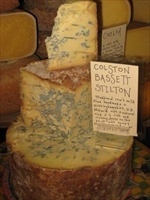
Stilton. Pop Quiz - named after the town in which it was made, or the town in which it was first sold? During the early eighteenth century, the town of Stilton was a staging post (town used to change/rest horses along the roads connecting major towns) on the London to York road. Cooper Thornhill, the landlord of the Bell Inn in Stilton, began serving a local soft, blue-veined cheese made in the neighboring town of Melton Mowbray (also famous for its Pork Pies also granted PDO - Protected Designation of Origin, by the European Union), Leicestershire. So you see, Stilton was in fact named after the town in which it was popularly sold, and not the town in which it was made. If it had been the reverse, what would have been the name of the famous Melton Mowbray Pork Pie? I once broke a tooth on a pork pie while on a childhood camping trip. Not a lot of people know that! The PDO control of Stilton means only three counties in England may produce a cheese called Stilton. I carry the Colston Basset variety. Yum!


Cheddar. I left the most complicated one until last! Easy when you consider that Cheddar originates from the village of Cheddar, in Somerset, South West England (AKA, “The West Country”). Cheddar Gorge (mentioned above), is on the outskirts of Cheddar village, and contains a number of natural caves, which provided the ideal humidity and constant temperature for maturing the cheese.  Cheddar cheese traditionally had to be made within 30 miles of Wells Cathedral. Easy when you consider that the name Cheddar also refers to the curd-cutting technique of repeated cutting and stacking, and draining of the curd blocks necessary to produce this type of cheese – “Cheddaring.”  Not so easy when you consider that in the domain of name protected foods (pun intended!), tragically, the name Cheddar was never protected. As such there are as many types of cheese named cheddar as there are ways to categorize (and hence name) cheeses! More in fact! Consider also that the history of Cheddar - a cheese that is very much part of the old world, is intimately tied up with cheeses in the new world American colonies. Cheddar etymology is very complicated! The European Union has designated a PDO (Protected Designation of Origin – a name protection) of, “West Country Farmhouse Cheddar” to denote cheddars that are made in a specific region of England that remain true to the historically accurate method of cheddar production and the resulting cheese. This type of cheddar is rugged, bound in lard and cloth, with many fissures where mold intrudes from the rough rind. This is the cheddar seen on medieval banquet tables! This type of cheddar is oft returned to the cheese shop because it is moldy! The history of Cheddar is a fascinating, complicated tale worthy of a PBS special. I shall return to Cheddar as an article in its own right. I also eagerly anticipate the release of Gordon (Zola) Edgar's new book on Cheddar, due out in 2012.


Now we turn back to the new world – the Americas (all apologies to our Antipodean friends!). The development of cheese production in the Americas is closely tied in with the colonies and with the expansion of settlement in the emerging country, together with the great cheeses of the old world. I will return to this in a separate article on Cheddar. For our purposes here, I will broadly claim that in order to understand our rapidly evolving numbers of American artisanal and farmstead cheeses, we firstly need to acknowledge the work and role of the American Cheese Society. Please visit their website and join this very important organization. Our enjoyment of fine cheeses in the USA is due to their efforts over the past thirty years. Also support independent cheese shops whom are members of The American Cheese Society. Ask them!
So, in brief I will say in order to understand naming of new world cheeses, firstly seek to understand the main types of great old world cheeses since our American cheeses are mostly based on some type of great old world cheese. This is a generalization of course. To the credit of The American Cheese Society’s work, American cheeses are evolving quickly. For now, at least it still helps to consider which type of old world cheese the American cheese is based on. Steve Jenkins' 1996 book, "The Cheese Primer" contains one of the most complete sections on, "The Great Cheeses" of the (old) world (pages 473 - 517). Another frame of reference, as I mentioned above, is that often the name of the individual farm, or dairy, is prefixed to the name of the new world cheese. A third frame of reference is the quirky pattern of naming the cheeses after the personality traits of the cheesemaker. Cato Corner Farm in Connecticut has some fine farmstead cheeses with an equally high caliber naming convention – cheesemaker Mark Gillman's love of James Joyce. 


Congratulations, we made it to the end of the article. How're you feeling? Overwhelmed? Tired? Confused? Enlightened? Hungry? In conclusion, my advice when it comes to understanding, heck, remembering, cheese names, is the same as I give to the panic stricken new hire at the cheese counter. Find a frame of reference that works for you. For me it’s as much about geography as it is methods of production. Use that as your yardstick, and work your way out from there, tasting indiscriminately as you build your own mind map! Use the tools available to you: books, articles, Google, and so forth. Rehoboth Beach Cheese Company’s Virtual Cheesemonger tool in development now will help guide you through methods of classifying cheese based on texture, milk type, country of origin, suggested use, and so on. What’s that if not a naming convention?


At the end of the cheese platter (that's my, "Bacchanalia Platter" pictured above!), there is no easy answer to your question. A knowledgeable guide helps, but what it all comes down to, is, well, a matter of taste. Do you want a story with that?

Andy Meddick, for the Rehoboth Beach Cheese Company.


Sep 19, 2011

If you subscribe to our E-ssue of The Grapevine newsletter then you may have already seen this. Please enjoy again if so! If you'd like to subscribe to The Grapevine, then click here.

We have an "Ask The Cheesemonger" section in our E-news. It's a very popular guest section, appearing when I have questions trending amongst customers. Wine has long enjoyed its day in the sun as a pairing with fine cheese. However, I'm noticing that beer is emerging strongly and the number of beer pairing questions are getting some long overdue attention.

Due to this nascent interest in beer and cheese pairings, I decided to quit my wine-ing for a little, and begin a new series exploring beer and cheese pairings. Since I wrote this, I started with my favorite beer type: IPA, or Indian Pale Ales.

Here's a link to this first in our Beer and Cheese Pairing series, written in response to our, "Ask The Cheesemonger" section in The Grapevine.

Got a question for the Cheesemonger? Contact us by e-mailing rbcheeseco@gmail.com , subject "Ask The Cheesemonger?" 

Sep 1, 2011

I'm detecting a pattern with some of my wholesale business-to-business accounts. It's concerning me because I think the customer is selling themselves short, which may be affecting their sales. There's also potential for misunderstanding. What I thought you said is not what you thought you meant!

So, it's made me wonder am I missing something in my sales pitch? I'm getting the account, 'closing' if you want to get all Glengarry Glen Ross on me. I'm getting the set of steak (cheese) knives. I get the opening order placed, I come in train the staff, consult on merchandising (if it's a retail account), and menu planning (if it's a food service account), yet the same thing crops up a few weeks into the relationship. I'll call it the price grip.

Having won the customer over with the 'value add' of using my business services to order their cheeses and specialty foods, orders start to get fractionated, with no discernable pattern in product choice. I have a hard time seeing the relation between the customer order and the inventory plan I helped put together with them. I get requests for pricing that don't materialize into an order, and re-orders for good products do not materialize. On visiting the account I see that product has sold down, so where are the orders going?

I get caught in a price war, which is exactly what I counsel against when I close the account. Customers focus purely on product price and shop around with distributors. Now I'm not down on distributors. I've oft pitched them to hire my services! I get a lot (not all) of my inventory through them and would be lost without them and the work they do on my behalf. However, the reason I do what I do has a lot to do with frustration over having to work with distributors with disempowered sales reps, sales reps. with a very dim, hostile viewpoint on customers, antiquated information systems (where they exist at all), poor inventory planning, sparse product information (with concomitant interruptions in supply), no product samples or help on site at ones business, and long supply chains. I got so frustrated at the effects this was having on my own retail store and food service, that I jumped in, got educated, and did a lot of their work myself.

I worked for IBM in the '80s and '90s. During the '80s (before the downturn in the company, and its corresponding rise as a global services business), we all still had on our desks an ancient sign. This sign, directed for us to display by the original founder, Thomas J. Watson Sr., said simply, THINK. So I got to thinking. I thunk, and thunk, and thunk. Then I procrastinated a few hours away on Facebook, then I thunk some more. Here's the results of all that navel gazing:

  1. What is my business, my company, about?
  2. What value add do I bring to your business?
1. I retail, wholesale, cater, and consult on high end, artisan and farmstead specialty foods:
  • Product selection, buying, inventory planning and control, merchandising, pricing, brand development and brand management, equipment needs, sales and marketing (physical and online worlds), web site design and management, staff training, customer education, and menu planning. 
  • I work with other businesses to ensure that they do not have to go through the painful learning process I had to. It's very costly to your business for you to have to go through what I went through in the earlier days of mine. The costs, and service interruptions nearly sunk my business, a few times!
  • While my product prices are competitive and fairly priced, I do not compete on product price. I can't. Instead I compete on value add, which in turn, if you take my advice, will increase your sales, all other things being equal - I do not own your business concept, staff, or your location. Some things are beyond my control. Your judgement here is better than mine - it's your business. I make my living on my value add, not my product pricing. If all I'm doing is replicating a price you get elsewhere, then you have no reason to use my services and buy from me.
2. My aim is to consult with you, understand your objectives and your business and make appropriate recommendations for product placement and a coordinated sales and marketing plan which included anything that my be specific to your business. For example, Mediterranean cheeses and North African seasonings for a Mediterranean restaurant, menu planning and staff training. I ask you a blunt question here. I've been in many fine restaurants, very well run establishments, great service, food, and ambience. Usually there is a cheese plate/board on the well designed menu. Yet not one server has ever tried to sell me the cheese course. Ever. Why is this?

Enter Rehoboth Beach Cheese Company, stage left! You may have gotten that cheese at a better price from another vendor, but how much are you saving if it's not selling? Is there a coordinated sales plan for the specialty cheeses? Do you have someone on staff, other than the Chef/Buyer, whom understands the cheese selection, conveys that to the servers, and monitors server interactions to ensure that the training is paying off? It takes a brave, focused customer to overcome the intimidation and order the cheese plate! This is my perception. I've been that intimidated customer, listening to the server recite the specials, while I have one eye on the cheese board on the menu trying to figure out if I should skip the appetizer, or skip dessert and order the cheese course?

So, here's a consulting freebie in the interest of dairy harmony, and not to cover my dairyere! I'm counseling a retail customer right now, driven by a bottom-line focused owner to buy on price. My advice is to work with the boss, he/she is not the enemy. I've been that harrangued boss, worrying about payroll costs, rent, which of my invoices are net 14, 30, 90. Which ones need to get paid this week and how much we need to sell to make the numbers work. I advised the staff member, their cheese buyer, that he/she is asking the boss the wrong questions. In the process the department inventory plan is falling apart, and sales will be affected. Resources are limited and one cannot carry everything. I counsel instead to ask for a budget and to come up with a process that the boss can get the sales and inventory figures he/she needs to be reassured that the inventory plan is working. Maybe I'm biased but I say take a small hit on margin and buy through my company, with the comfort that, if you follow my recommendations, increased sales volume may recover the loss in margin due to my higher product prices over the distributor. Run your department in a proactive way, being able to plan your inventory instead of reacting and always be hurriedly calling around shopping prices, juggling multiple vendor order deadlines, and dealing with supply interruptions. I can't promise you I can solve all your problems - it's your business. However, I can promise you that we will have partnership for the long haul. Your success is mine. That's a guarantee.

Finally some more consulting freebies!

  1. Is your business a member of the American Cheese Society? Mine is. I recommend you join also. You carry a high end product - the availability of which is directly reinforced by this organization. Does your distributor belong to this organization? Do they attend the conferences?
  2. Did you know October is the first ever American Cheese Month? What's your merchandising or menu plan to take advantage of this? How is that call you're making to your distributor Do they carry that cheese you need from that small farm you want to support? How's it working for you calling around all those farms and arranging shipping? Don't worry I'm on it!
In closing, as my own business evolves, I'm realizing some gaps I need to plug in the end product I supply to you. I'm formalizing a package that will be developed within a set of standard procedures that I will apply when consulting with each business. While the process I go through is standard, each business is different and based on my meetings with you and/or your staff, you will be given a report on my recommendations tailored for your business. This is a new product deliverable for my business. It's a formal deliverable you can purchase from me in terms of consulting services. You can choose a consulting package to complement the informal deliverable you get just by ordering specialty food inventory through me. All the advice, and product information I provide to your business when you order inventory through me is built into the price I charge for the product. That's why I cost more than the distributor. I do more than they do!

Call me! The Big Cheese (302) 381-6182. Invite me into your business for a chat! Let's team up and get a custom long range plan in place to grow your sales.

Aug 9, 2011

I just got back from 4 days in beautiful Montreal, Quebec, Canada. I was the sole attendee from Delaware attending the American Cheese Society 2011 Awards and Conference. While it's good to be first, ultimately it's not good to be the only!

Another slightly embarrassing fact - there are only two (count us!) members of the American Cheese Society from Delaware. Delaware Economic Development OfficeDelaware Department of Agriculture, and, Delaware Department of Tourism, pay attention!

Readers - did you know membership (and conference attendance) is open not just to cheese/specialty food professionals, but also to the general public? The membership fees are very reasonable, and if you're a fan of good cheese/authentic foods, please join ACS. More of that in another blog posting.

Anyways, since I've gotten back I'm busy catching up with orders, e-mails, 'phone calls to return, deadlines, a website upgrade and performance tuning project, and the August board meeting of Slow Food Delmarva. Also I have a project getting of the ground to raise seed monies and operating capital for our new retail storefront, financial markets are in a panicked free fall, our eldest dog is sick, and spouse is running for Mayor of our town - Rehoboth Beach. Elections are this Saturday, August 13 - please come out and vote to Change The Tone, Vote McGlone! It's a busy time, to say the least!

While I'm still absorbing this wonderful conference (check out my flair - to the right!), and how I can translate my experiences there to support a cheese industry on Delmarva, I wanted to post a quick, informal overview of the Top Ten Things I Learned at ACS Awards and Conference 2011. I'll post a more serious summary of my conference experience later in the week. With the turmoil in the financial worlds this week, we all need a touch of levity. So, step away from the 401K statement, grab a chunk of cheese, a beverage of choice, and read on!

Drum roll please! Clear throat, you're on!

Top Ten Things I Learned at ACS 2011, Montreal


10. Pepsin spoken with a French accent sounds confusingly like Pepsi.
9. Cheese makers are a really fun, cool bunch! Thanks for hanging with us cheese mongers, retailers, suppliers, distributors/wholesalers, educators, and caseophiles. We would not be here without you.
8. Montréal, je t'aime!
7. 17,000lbs of cheese were used at the conference.
6. It is possible to eat one’s body weight in cheese in 4 days! I implemented my own round of Quantitative Cheesing!
5. 1,676 North American Cheeses were submitted for judging, plus cultured milk products, taking two days to process Canadian customs and government inspection. My hands and jaw are still aching from all the clapping and broad grinning at the awards ceremony.
4. Flocculation can be discussed in front of one’s grandmother, for floc's sake!
3. Cleavage is finally of interest to me!
2. Quebec, Ontario, and Wisconsin. I’m sorry - I had no idea the variety of your artisanal cheeses. You have my respect forever. Quebec, Ontario, et Wisconsin.  je suis désolé - je n'ai eu aucune idée la variété de vos fromages artisanaux. Vous avez mon respect pour toujours.
1. ACS – what a great organization blessed with dedicated people working hard on our behalf. Your membership fee and conference fees are a really good deal! Please join ACS and get involved on a volunteer basis. You have no idea what it takes to get heritage and artisanal foods on our plates!


C'est ça! Au revoir! A bientôt! 

Jul 17, 2011


Eighteen years resident in the USA has brought a lot of experiences: some downright confusing; some funny; some touching; some frustrating; some joyful; some just filed under, "Huh?"


I think about a photograph of myself and my parents at London's Heathrow airport, Labor Day weekend, 1993. Ironically none of us had any idea it was Labor Day weekend, since we'd never heard of it (pre-google folks!). I have a 30" waist and, well, fairly decent hair, in a Hugh Grant floppy kind of way. Common to all three of us is a washed out, shell-shocked kind of look. We're trying to be brave, not processing the inevitable reality - emigration! I was 28 years old, recently single, flush with the selfishness of youth! In short, bewildered and putting on a brave face! In the space of one month I'd quit a good job which I'd loved, closed up my apartment, sold off, stored, or donated all my furniture, sold my car, and attended the first wedding from the college crowd. No pause for breath.

I remember my first hint of what was to come. The prior month had been a blur of frenzied activity - the pressure of having to do so much in such a short time frame. This had caused me to do some nutty things - ironic when you consider the nuttiness of moving overseas, alone. I'd showered in my underwear, and to the disgust of an automobile service assistance guy working the late shift call-out on the M5, had dropped my car keys in with the trash at a service station. Actually, as we later figured out, I'd spat them into the trash since my hands were full of trash! This was after the nice man had broken into my car and we'd emptied it of furniture and assorted belongings being 'donated' with the sale of the car.

So, after a month of hectic packing, letting go of stuff, saying goodbyes, and yes, excited anticipation, I find myself standing outside my (now former) place of employment, with an embarrassed Boss asking for my security pass. Corporate security rules meant that I was to be escorted clear of the front doors.

Suddenly here I am outside a place I'd known many colleagues and made many friends for five years, alone, in the middle of a work day. Reality hit. Reality Bites? Reality bit me on the tukkas 30 seconds after my Boss returned indoors. Part of me wanted to go back in and beg for my security pass. Security pass = security blankie.

When you stand alone, contemplating what to do next, you suddenly feel very grown up! I also get very stubborn - determined to make things work! I remembered how I felt the first time I traveled overseas on business alone - a mere peon of a junior systems analyst trusted with an expense account in Amsterdam! I told myself to keep focused on the fact I'd made a decision, that it's hard to move forward if you're looking behind, and to keep concentrating on the goal. So, stunned head held high, I rejected the blankie, and sloped away meekly to the bus stop (I'd sold my car, remember?). Who gets the bus to work when you're impressing your way up the ladder? Leaving your (now former) place of employment by bus in the middle of the work day having been escorted out was not exactly a motivating forward momentum!


Fast forward eighteen years through a visa, green card, citizenship, weddings attended (one my own into a lovely family in Southern New Jersey), weddings missed, sadly - funerals attended and missed (can one miss a funeral?), happily - births (not attended - ugh!), a small assortment of consulting and corporate career moves, a relocation to the beach, head of my own business, and we come to a skidding halt, right at the door of the word, "BESPOKE!"

You see eighteen years of adjustment means learning when to fit in, and when to just let it all hang out. It also means learning how to, "Stand on your own two feet," as my Dad says.When you're the Boss at the company, something your employees don't see (you NEVER let them!), is that well, not having someone managing you, holding your hand over decision making can take some getting used to. You're the one they're all looking at expecting a decision! Eventually you get it, and just  like eighteen years ago when I reminded myself to focus on the job at hand (relocation), as the person charged with making the decisions, I just focus on the job that needs doing.

As we're taught, words matter. So, what's the matter, Cheese Man? All this time living in my adopted country. All this time being, "The Man" that others work for, poke fun of, respect (one can only hope, Miss Aretha). All this time 'naturalizing' into a new culture and one darn word can make a lot of difference!

I've been here so long at this point. Heck I chose to become an American. I took it seriously man (that citizenship ceremony was a teary eyed wonderful trip!). I studied a civics manual 1 inch thick to become an American. After all this, one word came along and burst my Yankie bubble! You see, sometimes, it can be hard, after eighteen years to remember which bits are the Welsh bits, and which bits are the learned, adopted, American bits.

I forgot that 'bespoke' is a 'British' term. Just like I forget sometimes that I have the habit of reversing my sentence structure. This habit is a hangover from the days when everyone in Wales spoke Welsh. Sentence structure in Welsh, like many non-English languages is backwards. Questions are added after statements. Statements are used for questions. Look in my direction at a party - is the person I'm speaking with looking confused? Chances are he/she is getting an American sentence all backwards just like it's being translated into Welsh!

Bespoke got me in a lot of trouble and may have cost the business a few cheese platter orders this past Christmas season. I advertise my (admittedly) beautiful (bewteefull, or luvlee said with a Welsh accent) artisan cheese platters as, "Bespoke." This is a quaint British word for, 'made to order' - custom built to your specifications. It's an old tailoring term back when suits were hand made. I like its elegance. It bespeaks to the quality of my work.

I still love the word bespoke. However, for now, I've grown accustomed to the word, "Custom." So, in my American and Welsh way, I'll acknowledge my heritage - Wales is a land I love and miss dearly, but I'm no, "Welsh-American." That coat doesn't fit me.

(Side bar - I love this colloquialism from South Wales. When a Welshman is confused over which coat to pick off the bed on leaving a party, he will ask, "Whose coat is this jacket?"  If it's spring and everyone is wearing jackets, this double-speak makes perfect sense to a Welshman! A jacket is a type of coat, is it not? Is it? If one merely asked, "Whose jacket is this?" the host would be left with a lot of coats at the end of the party.) 

Incidentally, I once had a volunteer job at a Baltimore theater. Mainly ushering, but sometimes concierge service, VIP handling, and oh the horror, Coat Check Attendant! "Whose coat is this jacket, anyone?" Good times!

You never want to be left with a coat in the cupboard after an event, staring down a VIP, and suggesting you call them a cab because you gave someone else their jacket (that contained their car keys). Not that ever happened to me since I naturalized!

I took the oath of citizenship. I'm proud to be an American, whom is proud that he's from Wales. Never a true word bespoken. Happy Birthday month America, land that I love, as much as Wales, and as much as Cheese! Eat More Cheese! Fwyta caws mwy o!

Jun 29, 2011

Cheese Man, can I eat the rind?

One question. Two answers! My cheese inquisitor gets bang for the buck, since this is actually 2 questions. So hot shot:

Part Une: Is it edible?
Part Deux: Would I want to eat it, just 'cos I can?

Before we go there, let's go HERE: what are rinds? They're the protective coating around the cheese. Put more accurately, "What goes around becomes a rind!" Sometimes the rind (protective coating) is simply there as a containment vessel - a holding tank, if you will. More often (thankfully), the rind adds greatly to the discernment of the cheese - aesthetics, or taste experience.

Some cheeses are matinee idols because of their rinds, while others are the harbingers of good taste, being exceedingly well-dressed. Mr Blackwell would approve.

There are many ways to classify cheese, and rind-type is one. I classify rind types as, "Holding Tank Rinds" (plastic and wax shells (paraffin or natural such as beeswax), "Surface-ripened Rinds," and lastly, "Inside-out Ripened Rinds." I'll take each in turn and answer Part Une, et Part Deux!

"Holding Tank Rinds"
Think shrink-wrapped cryovac (you put the cry in the vac!) plastic wrap. Then, quite rightly, shudder at the thought! Plastic can have its uses - it can seal in moisture, but it can also seal in other nasty things such as air if the seal is not a vaccum, and then your cheese breaks down. It moves itself. Some moist cheddars behave well in cryovacs, but it's not my favorite way to experience cheese. It's a trade-off: convenience over experience.

Another holding tank gives us some of our prettiest labeled cheeses: wax. Think Goudas (cow such as the Vintage Goudas, or goat such as Midnight Moon). The wax in these cases is a paraffin wax, dipped, or brushed onto the cheese. Often beeswax is used; we can hold onto the straetgic oil reserve, but the function is the same - the cheese is sealed for aging. Anaerobic (work without oxygen) bacteria are sealed inside to work their aging magic. While this type of rind gives us some of our sweetest, complex cheeses, they're the bane of cheesemongers and the cause of many a bandaged finger! Do not eat these rinds, nor eat the bandage should you find it when you get home!

"Surface-ripened Rinds"
These cheeses are mostly your flat, or disc-shaped wheels as opposed to your rectangular block, circular, or cylinder ("Truckle") shapes. The flat/disc-shape gives a larger surface area allowing the cheese an easier time of ripening toward the center. These are your, "Outside-in" ripening cheeses. Common to all three types of surface-ripened cheese is their soft texture, and thin skin-like rind. The rind is due to the activity of bacteria, yeast, mold, or all three, depending on type. This category of rinds breaks down into three types:
1. Washed Rind: This technique was created by Medieval Monks in Northern France. The meaty flavor was deliberately created for fasting periods when meat was forbidden. Washing the rind kept the texture of the cheese moist and supple as it ripened. Balance the pH, moisture, and salt in fresh cheese, store in the right aging environment (95% humidity and 54 degrees Farenheit), give the cheese a frequent wash in a 3-5% salt solution and you get stinky, colorful, washed rinds. Brevibacterium linens bacteria thrive in such environments, ripening the cheese from the outside in. Often the salt solution is mixed with wine, brandy, or local spirits to further characterize the rind. Examples are the colorful orange washed rind Italian Taleggio, or the super stinky English "Stinking Bishop" - washed with fermented pear juice. The rind part of a washed rind is typically the most stinky (and completely edible) part of the washed rind cheese. The pastes are more subtle.

2. Bloomy Rind: Lower the temperature and humidity a tad in your aging environment ("Cave"), forgo the wash, and you'll get a nice, thin fuzzy layer of mold develop on the surface of your cheese. A particular strain of yeast, Penicillium Candidum, is responsible for this mold - the cheese is sprayed with this yeast before being aged. When partially aged, Bloomy Rind cheeses have a squidgy creamy-yellow layer just inside the rind where the cheese is more aged, with a drier, chalky, younger center. When fully aged, the squidgy creamy-yellow layer extends to the center of the cheese. Such aged cheeses are best enjoyed with the top sliced off and dipped into as opposed to sliced. Examples of bloomy rind cheeses are the white bloomy rind Brie style Kunik.

3. Natural Rind: Not as common as the prior two categories, but worth the hunt! The precise mix of bacteria, yeast, and mold is much more diverse and allowed to develop at will, resulting in cheeses that are earthy, musty, and complex. Such rinds are left to develop 'naturally' in the specific micro-environments of each cheese type's cave, instead of having a very particular strain of microorganism applied. These are rinds that while edible, you mostly do not want to eat either due to texture, or due to the odd flavor of the bacteria, yeast, or mold. Because most natural rind cheeses are aged for many months, they are made from raw milk. Examples of natural rind cheeses are Garroxta, Colston Basset Stilton, and Mimolette.

"Inside-out Ripened Rinds"
These cheeses are generally longer aged, drier cheeses with a crustier, less-palatable rind that is much slower to develop. The rind is there to protect the cheese from drying out, and from contamination as it matures. Ripening enzymes are still doing their magic - breaking down proteins in the cheese to make flavor, only they are working anaerobically (without oxygen), deep within the paste. Such cheeses are the big Mommas of the cheese world, with a greater ratio of paste to rind. The rinds are edible, sometimes you want to eat them, sometimes you most definitely do not! I break them into four types:


1. Clothbound: think huge wheels (actually cylinders called, "Truckles") of English Cheddars. The wheels are wrapped with a layer of cheesecloth (linen), then rubbed with lard to seal the cloth. Such cheddars are much drier than "Holding Tank Rind" cheddars since more moisture can get through the cloth/lard border crossing. A great example is Beecher's Flagship Reserve - an American cheddar made in the traditional English style. I don't know about you, but I don't find a combo of lard and cloth to be particularly edible, nor tempting, so I say pass on eating this rind, just listen to the tearing sound as the Cheesemonger slices into it, and look at the satisfaction on his face!

2. Washed Alpine: again - huge wheels, huge! This cheese style was invented by the creative herdsmen of Alpine pastures and one such famous type: Gruyere gives the name of origin for this category of cheeses. You see Alpine cheeses were traditionally made in remote regions of the mountains in eastern France, where large collective herds were moved to the alpage (mountain pastures) in May/June and remained through the middle of September each year. The cheeses needed to be large enough to accommodate the large amount of milk produced in remote areas, as well as sturdy enough to withstand the rigors of travel to the valley markets. Each region developed it's own unique style due to herd sizes, remoteness and local preferences. The cheeses were designed to keep for long months in mountainous regions. Also when such cheeses are transported down valley, is it not easier to transport fewer, large wheels, than many more little wheels? The naturally-developing rinds are washed periodically with brine to inhibit as opposed to promote the development of mold. Brevibacterium linens bacteria thrive on the washed surface of the cheese contributing to the rind. The cheeses were collectively referred to as Gruyere. The Gruyere of old being the assigned person who monitored the grazing activity and assessed the taxes for these Alpage areas. Other examples of Washed Alpine cheeses are Comte, Morbier, and Fontina. Such cheeses are fruity, sweet, grassy, earthy, and floral all at once. These complex flavors are due to specific  flora and fauna of high Alpine pastures. These are also your fondue cheeses - sweet and easily melted. These rinds, while edible are not advisable to eat!

3. Brushed RindsParmesan Reggiano is the classic example of this type of rinded cheese: naked and straw-colored. The cheeses are frequently washed and brushed during the long aging process in order to eliminate all types of surface culture development. This causes a casing (the rind) of dehydrated cheese to develop on the surface, thickening over time. At the two year aging, the rind of Parmesan Reggiano is about 3/4 inch thick! Such rinds are edible and yes you want to eat them. Save the rinds of Reggiano for use in broths, soups, stocks, and casseroles. They add much umami flavor. Who's umami now?

4. Dressed Rinds: My name for a group of cheeses, fresh, and aged, that have a natural rind which has been wrapped with leaves (think Valdeon), rubbed with herbs (think Manchego Anejo with Rosemary), or rubbed with seasonings (think Barely Buzzed rubbed with Espresso and Lavender). Voila - instant protective rind, that adds a pretty designer coat and a lovely flavor enhancement to boot! Sometimes edible and you should eat them. Sometimes inedible and don't eat them.


So, to sum up and to return to your question, Part Une, et Part Deux:

  • Sum rinds are inedible and I don't know about you, but I don't want to eat them. 
  • Sum rinds are edible but you don't want to eat them.
  • Sum rinds are edible and you want to eat them.
If in any doubt, find a good cheese store who know their stuff (online or on your street), ask, taste, ask, don't taste!

See you arind town cowboys...

Twitter Delicious Facebook Digg Stumbleupon Favorites More