Welcome to the blog of the Rehoboth Beach Cheese Company. Pull up a bar stool and experience our Counter Culture!

I'm Andy Meddick, Owner and President of the Rehoboth Beach Cheese Company. In 2005, I left my corporate I.T. job in Washington DC, to relocate with my spouse's business to the DE beaches. What to do now we live in a state where chicken houses can often outnumber human? Faced with a four hour round trip to the closest decent food market, I opened my first store, Good For You Market, a full service grocery store, focusing on organic, natural, and gourmet foods. In the worst economy since the 1930s, I won Best of Delaware awards three years running. After four years, I decided to simplify the business, re-aligning to focus on what we did best. The result is the Rehoboth Beach Cheese Company. We sell (retail and wholesale) artisan/farmstead cheeses, charcuterie, organic produce,and other specialty foods such as spices and seasonings. We also teach cheese classes, cater, sell online, and consult with other businesses to build their cheese programs.

I've learned much since starting out. For example, staffing was a steep learning curve, and I discovered that a savvy sales and marketing professional lay dormant in an I.T. geek! Systems analysis, business analysis, database design and development, data architecture, web design, specialty cheeses and foods, organic farming, catering, and cooking. What do all these threads have in common? Curiosity! It begets technique, which in turn begets better solutions to commond needs. Why complain about lack of choice, if you're not willing to offer an alternative? Our move, and my business development has taught me to participate in life, and to be ever curious! Enjoy!
Showing posts with label Ask The Cheesemonger. Show all posts

Oct 13, 2011

This post appeared in the, "Ask The Cheesemonger" section of this week's E-ssue of our newsletter, "The Grapevine." It is a dynamic article in that I've been updating as the passion takes me!

Q: Why are cheese names so confusing?
A: Uhm, you lost me!
Q: There're European ones that sound like towns - Gruyere, Cheddar. Then there're the funky random ones that sound like beers - Billy Blue, Constant Bliss, Bloomsday...

A: Ah, etymology! "What's in a name? That which we call a rose by any other name would smell as sweet." Yes, that is the William Shakespeare Rose, left.

When many people first delve into growing their knowledge of fine cheeses, figuring out the names of cheeses is something that drives us nuts! Our brains are hard wired to look for context, a definitive frame of reference by which to judge new experiences. Most of us do not like to operate in gray areas. The world of cheese, if you forgive the analogy, operates in nuances of gray. Embrace them!
As part of our ongoing web site upgrade project I’m designing a ‘Virtual Cheesemonger’ to guide you through our online store. I don’t want to give too much proprietary information away, but the basis of our Virtual Cheesemonger is a classification of cheese. Where does one start? Texture? Origin? Variety? Milk Type? Production Method? All of the above!

Old World cheeses are generally named after the region or method of production. Open a good cheese atlas* at random and browse the famous varieties of cheese such as Parmigiano Reggiano, Gorgonzola, Manchego, Reblochon de Savoie, Roquefort, Emmental, Comté, Stilton, Cheddar, the list goes on…  New World cheeses, while based on more famously named European cheeses are generally named after the farm on which they originated, often appended with a whimsical name with great meaning for the cheesemaker. For example, Cato Corner Farm Bloomsday. Alternatively, New World cheeses may receive a whimsical name alone. Consider, Consider Bardwell, if you will!


{* I like the "World Cheese Book" edited by Juliet Harbutt,

Dorling Kindersley Penguin Group (UK), 2009}


Let’s look at Old World cheeses as our illustration. There’s a joke in the artisan cheese world. We say, “Would you like a story with that (cheese)?” I’m unsure where this originated, but in a nod to the Slow Food movement, I think it suggests something antithetical to the eponymous, “Would you like fries with that?” Some of these cheeses are easy to spot why they’re so named. Others, not so much! What they all have in common, however, is that there is always a good story behind the cheese, and isn't that what good food is about? Sharing stories, community, if you will?

Parmigiano Reggiano, for example. Easy. P.R. (for short) originated in the province of Reggiano, in the Italian region of Emilia-Romagna. Parmigiano is the Italian adjective for Parma. Reggiano is the Italian adjective for Reggio Emilia. So, P.R. is named after the place in which it is made. Easy, right? Until you consider that no cheese is made in Parma! Parma is more famous for its ham, the pigs of which are fed on the whey bi-product of the famous cheese of the area. All clear?


Gorgonzola. I always assumed that there was a gorge involved. I grew up in South Wales overlooking the ‘West Country’ – the origin of Cheddar. Sunday afternoon car trips often ended at Cheddar Gorge. Before my editor freaks out, I should state, more accurately, that our Sunday afternoon car trips ended at the car park, adjacent to Cheddar Gorge! These trips forever marked my frame of reference for cheese! By the way, does anyone remember the Canadian animated series, “Bob and Margaret?” My favorite episode was the one where the couple entertained Canadian guests just a little past their guest sell by (stay by) date. Margaret fantacized about pushing her Canadian guests over Cheddar gorge. I digress! Gorgonzola – originally named, “Stracchino di Gorgonzola” derived from the Italian word, stracca, meaning tired. Gorgonzola was made in the fall when the cows returned, exhausted from mountain pastures to the meadows of Lombardy, where Gorgonzola was the main trading town. Easy!


Manchego. Not my favorite of Spain’s many cheeses, but easily the most famous. Named after the dry plateau of La Mancha in the center of Spain. The Moors named this region Al Mansha (land without water). It is the landscape that comes to mind when I think of Spain: hot, arid, dry. Such land is suited for sheep pasturing. It is the specific local breed of sheep, Manchega, that help give Manchego its name.


Reblochon de Savoie. You can be forgiven for thinking this stunningly beautiful, rich, buttery, washed rind, raw cows milk cheese is so named because it's from the (Haute) Savoie region of France. Why? You're half right! You see Reblochon has been made in the summer Alpine pastures of the Haute Savoie since the thirteenth century, but was unheard of until after the French revolution. Why? The name Reblochon comes from the old Savoie word reblocher, meaning, "to re-milk," or, "to pinch the cow's udder again!" Up until the French revolution the farmers were taxed according to the volume of milk their cattle produced. Farmers were forced to milk their cows in the presence of the tax collector. To avoid paying the tax, the farmer would only partially milkthe cows while the tax man was there. Once he'd left, the cows were re-milked. The remaining milk was much higher in fat and was reserved by the family for personal cheese making. After the revolution the tax was removed.


Roquefort. Folklore aside (2000 years ago love struck shepherd leaves his bread and cheese lunch in a cave while romancing, and returns to find it covered in a greenish mold), Roquefort, the most sublimely delicious sheep milk cheese EVER (think you don’t like blue cheese, put down that dressing and get thee to a cheese shop NOW), has been aged in the limestone caves of Cambalou, Southern France for centuries. In 1411, Charles VI signed a charter granting the people of Roquefort-sur-Soulzon the right to make Roquefort cheese. In a testament to terroir and the perilous way many of our traditional foods cling to existence, the specific strain of bacteria naturally occurring in the caves of Cambalou are also named for the cheese they help produce: penicillium roqueforti. All of this story telling does however have me stuck in a chicken or egg mind trap. What came first, the village, or the cheese? Easy or not? I’ll let you decide!


Emmental. Ah, the great melting cheese. I’m not going to cover its famous cousin here. Gruyère has a somewhat obscure, and very confusing, if fascinating etymology. Reasons of brevity cause me to walk on by, and well, “You know how to (Google), don’t you, Steve?”  Emmental, or Emmentaler, traces its origins back to 1293. However, the name was first recognized in 1542 when the recipe was given to the people of Langehthal in the Emme valley.


Comté. Produced for centuries in the region of eastern France known as, “Franche- Comté.” Could it be that easy? Yes, until you consider its alternate name, “Gruyère de Comté.” OK, I’ll stop teasing. Gruyère is purported to be named after the town of Gruyères in Switzerland. Sounds plausible until you consider that Gruyère also refers to the forests in Charlemagne’s Holy Roman Empire (which covered what is now France, Switzerland, and parts of Germany), over a millennium ago. Charlemagne’s men sold the forest wood to the local cheesemakers to fire the kettles they used to cook the curd for the cheese we know as Gruyère. Easy, non?


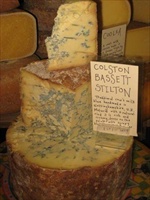
Stilton. Pop Quiz - named after the town in which it was made, or the town in which it was first sold? During the early eighteenth century, the town of Stilton was a staging post (town used to change/rest horses along the roads connecting major towns) on the London to York road. Cooper Thornhill, the landlord of the Bell Inn in Stilton, began serving a local soft, blue-veined cheese made in the neighboring town of Melton Mowbray (also famous for its Pork Pies also granted PDO - Protected Designation of Origin, by the European Union), Leicestershire. So you see, Stilton was in fact named after the town in which it was popularly sold, and not the town in which it was made. If it had been the reverse, what would have been the name of the famous Melton Mowbray Pork Pie? I once broke a tooth on a pork pie while on a childhood camping trip. Not a lot of people know that! The PDO control of Stilton means only three counties in England may produce a cheese called Stilton. I carry the Colston Basset variety. Yum!


Cheddar. I left the most complicated one until last! Easy when you consider that Cheddar originates from the village of Cheddar, in Somerset, South West England (AKA, “The West Country”). Cheddar Gorge (mentioned above), is on the outskirts of Cheddar village, and contains a number of natural caves, which provided the ideal humidity and constant temperature for maturing the cheese.  Cheddar cheese traditionally had to be made within 30 miles of Wells Cathedral. Easy when you consider that the name Cheddar also refers to the curd-cutting technique of repeated cutting and stacking, and draining of the curd blocks necessary to produce this type of cheese – “Cheddaring.”  Not so easy when you consider that in the domain of name protected foods (pun intended!), tragically, the name Cheddar was never protected. As such there are as many types of cheese named cheddar as there are ways to categorize (and hence name) cheeses! More in fact! Consider also that the history of Cheddar - a cheese that is very much part of the old world, is intimately tied up with cheeses in the new world American colonies. Cheddar etymology is very complicated! The European Union has designated a PDO (Protected Designation of Origin – a name protection) of, “West Country Farmhouse Cheddar” to denote cheddars that are made in a specific region of England that remain true to the historically accurate method of cheddar production and the resulting cheese. This type of cheddar is rugged, bound in lard and cloth, with many fissures where mold intrudes from the rough rind. This is the cheddar seen on medieval banquet tables! This type of cheddar is oft returned to the cheese shop because it is moldy! The history of Cheddar is a fascinating, complicated tale worthy of a PBS special. I shall return to Cheddar as an article in its own right. I also eagerly anticipate the release of Gordon (Zola) Edgar's new book on Cheddar, due out in 2012.


Now we turn back to the new world – the Americas (all apologies to our Antipodean friends!). The development of cheese production in the Americas is closely tied in with the colonies and with the expansion of settlement in the emerging country, together with the great cheeses of the old world. I will return to this in a separate article on Cheddar. For our purposes here, I will broadly claim that in order to understand our rapidly evolving numbers of American artisanal and farmstead cheeses, we firstly need to acknowledge the work and role of the American Cheese Society. Please visit their website and join this very important organization. Our enjoyment of fine cheeses in the USA is due to their efforts over the past thirty years. Also support independent cheese shops whom are members of The American Cheese Society. Ask them!
So, in brief I will say in order to understand naming of new world cheeses, firstly seek to understand the main types of great old world cheeses since our American cheeses are mostly based on some type of great old world cheese. This is a generalization of course. To the credit of The American Cheese Society’s work, American cheeses are evolving quickly. For now, at least it still helps to consider which type of old world cheese the American cheese is based on. Steve Jenkins' 1996 book, "The Cheese Primer" contains one of the most complete sections on, "The Great Cheeses" of the (old) world (pages 473 - 517). Another frame of reference, as I mentioned above, is that often the name of the individual farm, or dairy, is prefixed to the name of the new world cheese. A third frame of reference is the quirky pattern of naming the cheeses after the personality traits of the cheesemaker. Cato Corner Farm in Connecticut has some fine farmstead cheeses with an equally high caliber naming convention – cheesemaker Mark Gillman's love of James Joyce. 


Congratulations, we made it to the end of the article. How're you feeling? Overwhelmed? Tired? Confused? Enlightened? Hungry? In conclusion, my advice when it comes to understanding, heck, remembering, cheese names, is the same as I give to the panic stricken new hire at the cheese counter. Find a frame of reference that works for you. For me it’s as much about geography as it is methods of production. Use that as your yardstick, and work your way out from there, tasting indiscriminately as you build your own mind map! Use the tools available to you: books, articles, Google, and so forth. Rehoboth Beach Cheese Company’s Virtual Cheesemonger tool in development now will help guide you through methods of classifying cheese based on texture, milk type, country of origin, suggested use, and so on. What’s that if not a naming convention?


At the end of the cheese platter (that's my, "Bacchanalia Platter" pictured above!), there is no easy answer to your question. A knowledgeable guide helps, but what it all comes down to, is, well, a matter of taste. Do you want a story with that?

Andy Meddick, for the Rehoboth Beach Cheese Company.


Sep 19, 2011

If you subscribe to our E-ssue of The Grapevine newsletter then you may have already seen this. Please enjoy again if so! If you'd like to subscribe to The Grapevine, then click here.

We have an "Ask The Cheesemonger" section in our E-news. It's a very popular guest section, appearing when I have questions trending amongst customers. Wine has long enjoyed its day in the sun as a pairing with fine cheese. However, I'm noticing that beer is emerging strongly and the number of beer pairing questions are getting some long overdue attention.

Due to this nascent interest in beer and cheese pairings, I decided to quit my wine-ing for a little, and begin a new series exploring beer and cheese pairings. Since I wrote this, I started with my favorite beer type: IPA, or Indian Pale Ales.

Here's a link to this first in our Beer and Cheese Pairing series, written in response to our, "Ask The Cheesemonger" section in The Grapevine.

Got a question for the Cheesemonger? Contact us by e-mailing rbcheeseco@gmail.com , subject "Ask The Cheesemonger?" 

Jun 29, 2011

Cheese Man, can I eat the rind?

One question. Two answers! My cheese inquisitor gets bang for the buck, since this is actually 2 questions. So hot shot:

Part Une: Is it edible?
Part Deux: Would I want to eat it, just 'cos I can?

Before we go there, let's go HERE: what are rinds? They're the protective coating around the cheese. Put more accurately, "What goes around becomes a rind!" Sometimes the rind (protective coating) is simply there as a containment vessel - a holding tank, if you will. More often (thankfully), the rind adds greatly to the discernment of the cheese - aesthetics, or taste experience.

Some cheeses are matinee idols because of their rinds, while others are the harbingers of good taste, being exceedingly well-dressed. Mr Blackwell would approve.

There are many ways to classify cheese, and rind-type is one. I classify rind types as, "Holding Tank Rinds" (plastic and wax shells (paraffin or natural such as beeswax), "Surface-ripened Rinds," and lastly, "Inside-out Ripened Rinds." I'll take each in turn and answer Part Une, et Part Deux!

"Holding Tank Rinds"
Think shrink-wrapped cryovac (you put the cry in the vac!) plastic wrap. Then, quite rightly, shudder at the thought! Plastic can have its uses - it can seal in moisture, but it can also seal in other nasty things such as air if the seal is not a vaccum, and then your cheese breaks down. It moves itself. Some moist cheddars behave well in cryovacs, but it's not my favorite way to experience cheese. It's a trade-off: convenience over experience.

Another holding tank gives us some of our prettiest labeled cheeses: wax. Think Goudas (cow such as the Vintage Goudas, or goat such as Midnight Moon). The wax in these cases is a paraffin wax, dipped, or brushed onto the cheese. Often beeswax is used; we can hold onto the straetgic oil reserve, but the function is the same - the cheese is sealed for aging. Anaerobic (work without oxygen) bacteria are sealed inside to work their aging magic. While this type of rind gives us some of our sweetest, complex cheeses, they're the bane of cheesemongers and the cause of many a bandaged finger! Do not eat these rinds, nor eat the bandage should you find it when you get home!

"Surface-ripened Rinds"
These cheeses are mostly your flat, or disc-shaped wheels as opposed to your rectangular block, circular, or cylinder ("Truckle") shapes. The flat/disc-shape gives a larger surface area allowing the cheese an easier time of ripening toward the center. These are your, "Outside-in" ripening cheeses. Common to all three types of surface-ripened cheese is their soft texture, and thin skin-like rind. The rind is due to the activity of bacteria, yeast, mold, or all three, depending on type. This category of rinds breaks down into three types:
1. Washed Rind: This technique was created by Medieval Monks in Northern France. The meaty flavor was deliberately created for fasting periods when meat was forbidden. Washing the rind kept the texture of the cheese moist and supple as it ripened. Balance the pH, moisture, and salt in fresh cheese, store in the right aging environment (95% humidity and 54 degrees Farenheit), give the cheese a frequent wash in a 3-5% salt solution and you get stinky, colorful, washed rinds. Brevibacterium linens bacteria thrive in such environments, ripening the cheese from the outside in. Often the salt solution is mixed with wine, brandy, or local spirits to further characterize the rind. Examples are the colorful orange washed rind Italian Taleggio, or the super stinky English "Stinking Bishop" - washed with fermented pear juice. The rind part of a washed rind is typically the most stinky (and completely edible) part of the washed rind cheese. The pastes are more subtle.

2. Bloomy Rind: Lower the temperature and humidity a tad in your aging environment ("Cave"), forgo the wash, and you'll get a nice, thin fuzzy layer of mold develop on the surface of your cheese. A particular strain of yeast, Penicillium Candidum, is responsible for this mold - the cheese is sprayed with this yeast before being aged. When partially aged, Bloomy Rind cheeses have a squidgy creamy-yellow layer just inside the rind where the cheese is more aged, with a drier, chalky, younger center. When fully aged, the squidgy creamy-yellow layer extends to the center of the cheese. Such aged cheeses are best enjoyed with the top sliced off and dipped into as opposed to sliced. Examples of bloomy rind cheeses are the white bloomy rind Brie style Kunik.

3. Natural Rind: Not as common as the prior two categories, but worth the hunt! The precise mix of bacteria, yeast, and mold is much more diverse and allowed to develop at will, resulting in cheeses that are earthy, musty, and complex. Such rinds are left to develop 'naturally' in the specific micro-environments of each cheese type's cave, instead of having a very particular strain of microorganism applied. These are rinds that while edible, you mostly do not want to eat either due to texture, or due to the odd flavor of the bacteria, yeast, or mold. Because most natural rind cheeses are aged for many months, they are made from raw milk. Examples of natural rind cheeses are Garroxta, Colston Basset Stilton, and Mimolette.

"Inside-out Ripened Rinds"
These cheeses are generally longer aged, drier cheeses with a crustier, less-palatable rind that is much slower to develop. The rind is there to protect the cheese from drying out, and from contamination as it matures. Ripening enzymes are still doing their magic - breaking down proteins in the cheese to make flavor, only they are working anaerobically (without oxygen), deep within the paste. Such cheeses are the big Mommas of the cheese world, with a greater ratio of paste to rind. The rinds are edible, sometimes you want to eat them, sometimes you most definitely do not! I break them into four types:


1. Clothbound: think huge wheels (actually cylinders called, "Truckles") of English Cheddars. The wheels are wrapped with a layer of cheesecloth (linen), then rubbed with lard to seal the cloth. Such cheddars are much drier than "Holding Tank Rind" cheddars since more moisture can get through the cloth/lard border crossing. A great example is Beecher's Flagship Reserve - an American cheddar made in the traditional English style. I don't know about you, but I don't find a combo of lard and cloth to be particularly edible, nor tempting, so I say pass on eating this rind, just listen to the tearing sound as the Cheesemonger slices into it, and look at the satisfaction on his face!

2. Washed Alpine: again - huge wheels, huge! This cheese style was invented by the creative herdsmen of Alpine pastures and one such famous type: Gruyere gives the name of origin for this category of cheeses. You see Alpine cheeses were traditionally made in remote regions of the mountains in eastern France, where large collective herds were moved to the alpage (mountain pastures) in May/June and remained through the middle of September each year. The cheeses needed to be large enough to accommodate the large amount of milk produced in remote areas, as well as sturdy enough to withstand the rigors of travel to the valley markets. Each region developed it's own unique style due to herd sizes, remoteness and local preferences. The cheeses were designed to keep for long months in mountainous regions. Also when such cheeses are transported down valley, is it not easier to transport fewer, large wheels, than many more little wheels? The naturally-developing rinds are washed periodically with brine to inhibit as opposed to promote the development of mold. Brevibacterium linens bacteria thrive on the washed surface of the cheese contributing to the rind. The cheeses were collectively referred to as Gruyere. The Gruyere of old being the assigned person who monitored the grazing activity and assessed the taxes for these Alpage areas. Other examples of Washed Alpine cheeses are Comte, Morbier, and Fontina. Such cheeses are fruity, sweet, grassy, earthy, and floral all at once. These complex flavors are due to specific  flora and fauna of high Alpine pastures. These are also your fondue cheeses - sweet and easily melted. These rinds, while edible are not advisable to eat!

3. Brushed Rinds: Parmesan Reggiano is the classic example of this type of rinded cheese: naked and straw-colored. The cheeses are frequently washed and brushed during the long aging process in order to eliminate all types of surface culture development. This causes a casing (the rind) of dehydrated cheese to develop on the surface, thickening over time. At the two year aging, the rind of Parmesan Reggiano is about 3/4 inch thick! Such rinds are edible and yes you want to eat them. Save the rinds of Reggiano for use in broths, soups, stocks, and casseroles. They add much umami flavor. Who's umami now?

4. Dressed Rinds: My name for a group of cheeses, fresh, and aged, that have a natural rind which has been wrapped with leaves (think Valdeon), rubbed with herbs (think Manchego Anejo with Rosemary), or rubbed with seasonings (think Barely Buzzed rubbed with Espresso and Lavender). Voila - instant protective rind, that adds a pretty designer coat and a lovely flavor enhancement to boot! Sometimes edible and you should eat them. Sometimes inedible and don't eat them.


So, to sum up and to return to your question, Part Une, et Part Deux:

  • Sum rinds are inedible and I don't know about you, but I don't want to eat them. 
  • Sum rinds are edible but you don't want to eat them.
  • Sum rinds are edible and you want to eat them.
If in any doubt, find a good cheese store who know their stuff (online or on your street), ask, taste, ask, don't taste!

See you arind town cowboys...

Twitter Delicious Facebook Digg Stumbleupon Favorites More